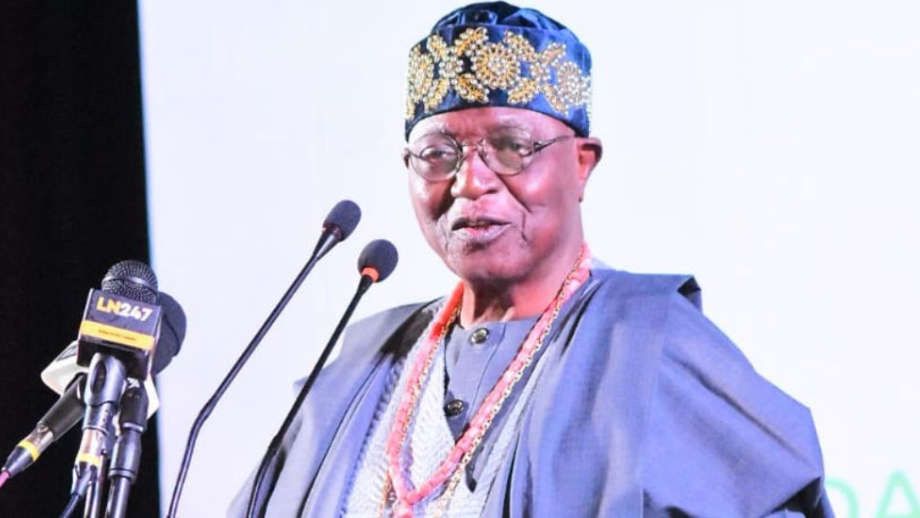


Speech by Kabiyesi, Oba Oladipo Olaitan, Leader of Afenifere, at 2026 National Convention/Presidential Primaries
June 2, 2026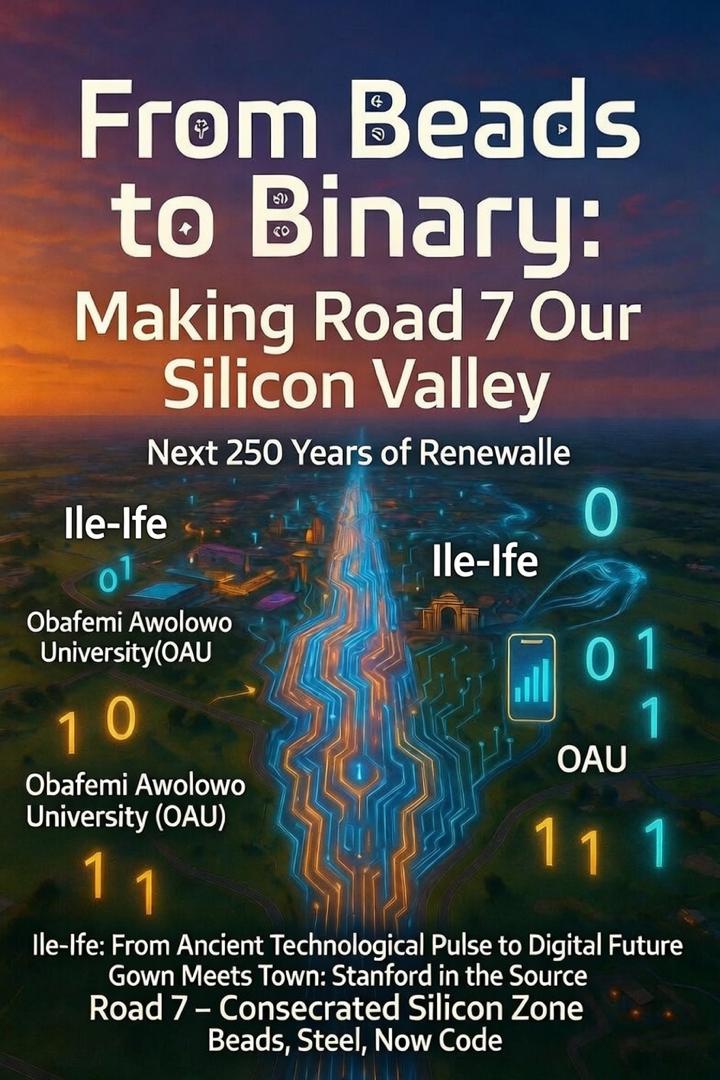
By Olusegun R. Babalola
“The State shall … encourage development of technological and scientific studies which enhance cultural values.” – Section 21(b), Chapter II (Fundamental Objectives And Directive Principles of State Policy) 1999 Constitution of the Federal Republic of Nigeria (as ammended).
Long before the first university was built, long before the first line of code was written, Ile-Ife was a hub of specialized manufacturing. In the first millennium, our ancestors didn’t just build a city; they engineered a civilization. They transformed raw sand into intricate beads, mastered specialized steel production, and created goods that radiated across trade routes far beyond our shores. Ile-Ife was not merely the spiritual heart of the Yoruba world—it was its technological pulse. That instinct to create, to fashion value from raw material, is not lost. It has simply been waiting for a new medium. Today, that medium is code.
In recent years, i have come across several app developers with splendid (local and global) and life changing ideas—myself and several friends included—that are building mobile and web applications that aim to solve several and urgent problems. We write code by day, debug by night, and dream of scalable products. The talent is undeniable, but the ecosystem is fragmented, whilst many are starved of funding and necessary supports. The missing piece is intentionality – spacial dedication with technical and financial supports. This is where the stretch of Road 7, just outside the gates of Obafemi Awolowo University is important. A quiet revolution can happen here if we could stop seeing this corridor as a mere off-campus residential zone and start recognizing it for what it could be: our own Silicon Valley—a dense, dynamic innovation district powered by youth, anchored by a university, entrenched by ancient political tradition and consecrated by history.
The location is auspicious. Road 7 sits in the shadow of OAU, one of Nigeria’s most prestigious academic institutions. A formal partnership with the university would transform this cluster into a structured innovation hub. Imagine a scenario where OAU’s Faculty of Technology, its business school, and its research centres actively feed this zone. Final-year projects wouldn’t just gather dust in the library; they would transition into viable startups housed on Road 7. The university would provide research support, intellectual mentorship, and a steady pipeline of young talent, while the zone offers a real-world laboratory where academic theory meets market demand. This symbiosis between gown and town is the exact DNA that made Stanford the launchpad for Silicon Valley in California. We have the same raw ingredients here in Ile-Ife.
But this vision requires more than a university partnership. It demands a coalition of guardians who hold a stake in Ile-Ife’s enduring legacy. The Osun State government must see Road 7 not as a cluster of haphazard buildings, but as a future Special Technology Zone, with reliable electricity, fiber-optic broadband, and tax incentives for registered tech startups. The Ooni of Ile-Ife (who is already a lover of app developers), the custodian of our civilizational pride, has a unique role: to bless this modern form of craftsmanship and signal to the world that the children of Oduduwa are transitioning from making beads and bronze heads to building platforms. The people of present-day Ile-Ife must embrace the idea that hosting a tech district will bring prosperity and global relevance, while the great descendants who emigrated from this source—spread all over West Africa and across Lagos, the Americas, Europe, and beyond—must invest, not as charity, but in recognition that Ile-Ife is their intellectual home. Those who have benefited from the city’s immense gifts to the world (including Ifa’s political philosophy and Oduduwa’s political science), and those of good will who hope to benefit from its future, have a shared obligation to ensure this civilizational renaissance. All hands must be on the deck.
This is about the next 250 years of the Plutonic cycle—a deep, generational orbit of civilizational renewal. Ile-Ife’s greatness was established with beads, specialized steel and other manufactured goods, 16-bits Ifa knowledge system and an advanced political science; ours will be established with algorithms and digital platforms. The first millennium was about crafting physical ornaments that adorned bodies and homes. This millennium is about crafting digital infrastructure that connects minds, world over. The medium has changed, but the essential act remains the same: taking the raw material of our era—data—and fashioning it into tools of value, beauty, and utility.
We can achieve this transformation in half a decade to a decade with consistency. Five years of focused collaboration between developers, the university, the government, the House of Oduduwa, and the diaspora can turn Road 7 into a true technology headquarters. The timeline is realistic if we move with the urgency this moment demands. The world is racing toward a digital future, and Africa’s narrative is being written in real-time by cities like Lagos, Nairobi, and Kigali. Ile-Ife must not be a footnote in this story. We are not newcomers to innovation; we are its ancient practitioners.
The young developers are writing code with the same spirit with which our forebears fired kilns and forged metal. We are merely waiting for the structures around us to match the scale of our ambition. Let us build a Silicon zone here—a consecrated ground where the next generation of African unicorns is born, not in California or Berlin, but in the ancient, fertile soil of the source. Ile-Ife has given the world too much to be left behind. It is time to make Road 7 the bridge from our illustrious past to our boundless digital future.