

Treat Ifá like Aristotle, Falola charges Nigerian universities
July 17, 2026
The Followership-Leader-Organising Principle Triad
August 8, 2026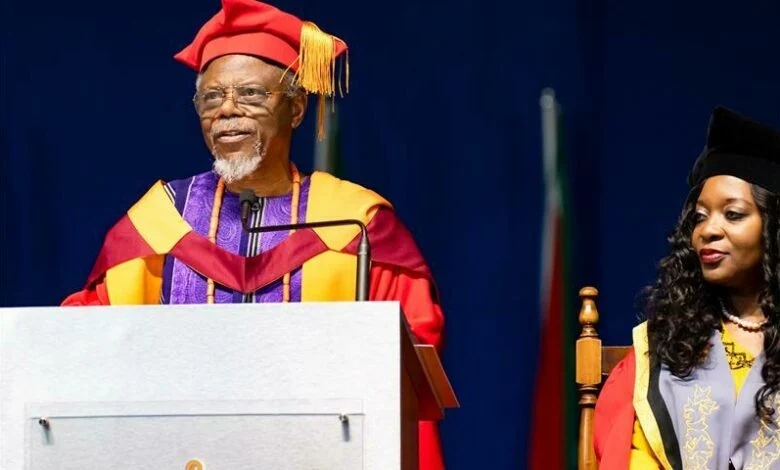
Historian and Professor of African Studies, Toyin Falola, has urged the National Assembly to incorporate the invocation of Yoruba deities, Sango and Ogun, into the oath of office for public officials as part of efforts to curb corruption, impunity and abuse of office in Nigeria.
Falola argued that the fear of moral and spiritual consequences could strengthen public accountability beyond what existing constitutional safeguards have achieved.
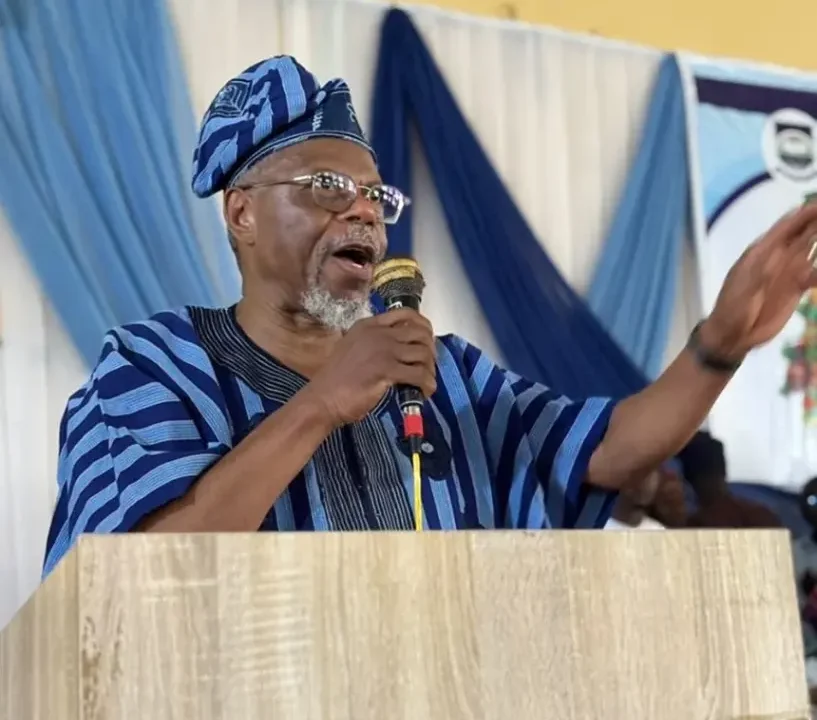
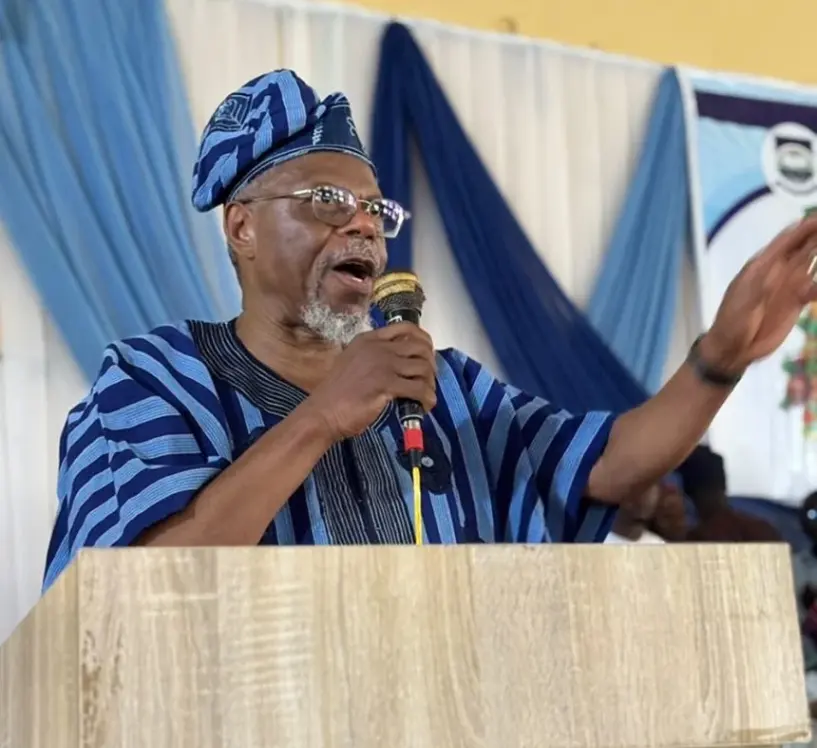
He made the call while delivering the keynote lecture, “Yorùbá Mythologies and Their Relevance Today,” at the inauguration of the Alaafin Institute of Yoruba Studies at Emmanuel Alayande University of Education, Oyo, on Tuesday.
The historian questioned why Nigeria’s elaborate legal framework had failed to deter corrupt public officials and suggested drawing from indigenous traditions to reinforce accountability.
Falola said, “To decolonise corruption, impunity and abuse of office, what prevents our National Assembly from incorporating the nemesis of Sango into the Oath of Office for all, regardless of their religious faith?”
“I wonder if any Nigerian politician could withstand the wrath of Ogun and Sango as they would violate with impunity the letters and spirit of the Western laws!”
He, however, clarified that he was not advocating a return to pre-colonial political institutions but urging policymakers to draw from indigenous African political philosophy to strengthen modern governance.
Falola argued that institutions function effectively only when citizens regard political authority as morally legitimate.
“The prescription constantly fails to address the issue of legitimacy. Institutions are functional only to the extent that the people subject to them regard their power as legitimate.”
Drawing from Yoruba political philosophy, Falola said authority was historically rooted in àṣẹ, the spiritual and moral authority that validates leadership.
“Instead, the Yorùbá political philosophy is based on something that the common Yorùbá really believe in: àṣẹ, which in turn depends on moral rectitude. A monarch who does not act with the character appropriate to a man who bears divine power loses, by that very failing, the àṣẹ that makes his authority real.”
According to him, the philosophy teaches that leadership without integrity loses its moral claim to authority.
“It’s a political philosophy that argues power without a moral basis is not authority but coercion; that communities have both the right and the need to withdraw their respect from leaders who show that they lack real àṣẹ.”
He noted that traditional Yoruba political institutions embedded accountability into governance long before the emergence of contemporary democracy.
“The Ọọ̀ni, the Aláàfin and other traditional rulers in the Yorùbá institution have traditionally worked under frameworks of responsibility that have this idea built into the practice of government,” he said.
Falola added that traditional institutions recognised leadership as conditional upon ethical conduct rather than permanent political entitlement.
“The chiefs might be eliminated. When communal welfare required, the council might invite kings to ‘open the calabash’—a ritualised invitation to die. These were not ideal systems. No system is. But they embody a political understanding about the link between power and responsibility that the post-colonial Nigerian state has spectacularly failed to institutionalise.”
He maintained that taking Yoruba political theory seriously did not amount to rejecting democracy.
“To take Yorùbá political theory seriously does not mean to urge a return to pre-colonial rule. It is an invitation to wrestle with the intellectual resources existing inside the tradition when thinking about what legitimate governance looks like.”
He added that engaging indigenous political thought required more than honouring traditional rulers at official ceremonies.
“This entails more than just the honouring of traditional rulers in state ceremonies. This entails grappling with basic values—responsibility, reciprocity and the moral foundation of power—and questioning whether they can be made to operate within modern institutional systems.”
According to him, decades of constitutional reforms, electoral adjustments and institutional restructuring have failed to solve Nigeria’s governance crisis because they have focused largely on institutional design while neglecting the moral foundations of leadership.
“Nigerian governance has prompted a lot of debate, mostly focused on the structural shortcomings of the post-colonial state – corruption, ethnic violence, weak rule of law and insufficient accountability.
“The conventional prescription is to reinforce formal institutions, develop legal frameworks based on Western constitutional democracy and improve transparency. It must happen. All of it. None of it is enough,” he said.
Falola also argued that Western constitutional democracy emerged from Europe’s historical experience and should not automatically be regarded as sufficient for societies with different cultural and philosophical traditions.
“Western constitutional democracy legitimates itself in terms of an intellectual heritage, social contract theory, natural rights and liberal individualism. The ideas aren’t culturally neutral. They came out of specific historical conditions in seventeenth- and eighteenth-century Europe, and they don’t translate seamlessly into contexts that have radically different assumptions about individuality, community and authority.”
He concluded that Nigeria’s democratic reforms must move beyond constitutional amendments to embrace ethical leadership, cultural legitimacy and public accountability if they are to deliver lasting good governance.