
Forceful Evictions and Demolition of Poor Homes: Reward for “Yorùbá Ló Kàn ! ” “Ọmọ Ẹni Kí Ṣe Idì Bẹ̀bẹ̀rẹ̀…..”
August 14, 2025
Descriptive Elements In Yoruba Palace Architecture and Cultural Values of the new Olubadan Palace
September 14, 2025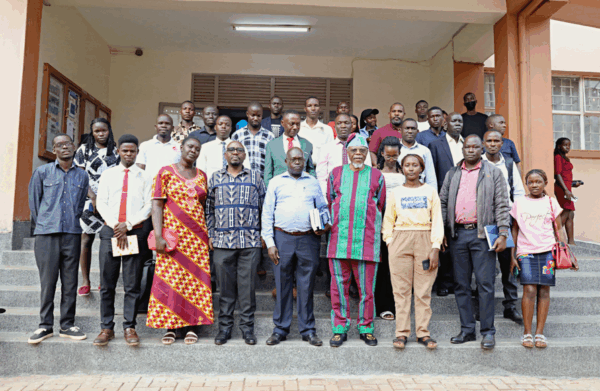
Toyin Falola
The world is filled with information. The stories that we share and refuse to share possess enormous amounts of power. The most significant wars are never won with money or bullets, but with ideas, perceptions, and cultural narratives. Narrative power is the capacity to create what individuals experience as real, right, and possible through narrative. It determines the way members of societies understand history, identity, morality, and the future. Narrative power, as opposed to coercive or economic power based on violence or money, is a source of soft power, intangible but pervasive, rooted in media, education, religion, and culture. Those who control the narrative tend to control reality itself.
I have argued that narrative agency is at the heart of political liberty and cultural sovereignty. In African historiography and systems of knowledge, history is not just cultural but also political. Narrative dictates who gets in and who remains out, what is desirable and what is dangerous. For Ngũgĩ wa Thiong’o, “to control a people’s culture is to control their tools of self-definition.” The way narrative power operates, and the consequences for Africa and the World are important and need to be well studied. Narrative power is the ability to shape people’s understanding of reality by controlling and leveraging what they read and see. These are the kinds of stories that can make an entire worldview: what is good, real, who is good, who is bad, and what is possible or impossible. Narrative power is not just about the content of stories, but also who tells them, how it is told, and whose voice is heard or louder.
In The Power of African Cultures, I point out that cultures are not receptacles of values in a passive sense; they are contested terrain where accounts are narrated, disputed, and re-invented to fit various other agendas. Unlike economic or military power, narrative power operates through persuasion, repetition, symbol, and emotional appeal. It is exercised in movies, the media, textbooks, museums, religious sermons, and everyday conversation. It has the power to mobilize citizens behind a vision or divide them by fear. Political leaders, corporations, activists, and intellectuals all fight a battle over story, to win legitimacy, to mobilize people, or to displace their opponents. To see this invisible power is to see today’s politics and society. Narrative power is multi-dimensional.

Power, to discourse analysts like Michel Foucault, exists in language and knowledge. Power not only represses; it also creates ideas, norms, and truths. One of its most significant features is framing, the ability to define the meaning of events. A protest: is it a “riot” or a “revolution”? The frame elicits public sympathy or outrage. Legitimation is significant too: whose tales are accepted and whose are pushed into illegitimate and irrational talk?
Another axis is memory and forgetting. Master narratives also prefer to remember the histories of empires and forget the colonized voices. In Rethinking African Historiographies, I trace how African oral traditions were marginalized by colonial historiography and silenced an entire civilization. Similarly, moral imagination, what is right, natural, or necessary, is created in narrative form. For instance, decades of Western media have built up Africa as a troubled continent and natural external intervention and dependency stories as common sense. They are handy stories for geopolitical agendas and shape world policy.
Narrative power is not just a theory but is being exercised in politics, movements, and everyday life. A historical example is colonialism, in which European powers used the excuse of “civilizing” the uncivilized. The native population was portrayed as primitive, uncivilized, and requiring Western dominance. Colonialism begins with the colonization of the mind and language, as Ngũgĩ wa Thiong’o argues in Decolonising The Mind. It is only through the recuperation of narrative that once-colonized subjects can be completely self-sufficient.
Recent social movements have shown that the force of narrative in altering the world order is significant. The #MeToo movement changed the narratives of sexual harassment to institutional rather than just personal, which led to institutional reactions. Also, the #BlackLivesMatter movement changed the global perspective as regards justice, race, and police brutality. These movements were successful not just because of the protests but also by using the emotional and moral compelling narratives to appeal to the people. In authoritarian settings, the narrative power is key to maintaining power. They construct myths of national greatness, unity, or external threats to suppress dissent. Propaganda is not just used to report, but to build and destroy other means of perception. Here, the story becomes fact, and truth is tightly controlled.
Narrative power resonates deeply in the African experience. During colonialism, it was European colonizers who used stories to justify conquest and dominance. Africans were portrayed as irrational and incapable of self-governance. Colonial education systems, judicial systems, and cultural institutions disseminated these stories. Many African thinkers have been involved in challenging these representations, and in Decolonizing African Studies, I did my part to argue that the reconstitution of indigenous knowledge systems, oral traditions, and African philosophies is at the core of postcolonial sovereignty and changing the narrative.
These were not the only African intellectuals who made contributions to this account. Chinua Achebe’s Things Fall Apart was a point-for-point response to colonial accounts of Africa. In the same way, Edward Said lamented how the West constructed the East as a place of mystery and barbarism in his seminal work Orientalism. What these thinkers observed was that Africans must be able to narrate their pasts, presents, and futures to respond to these accounts. It is not about historical justice. It is for development. If Africa is always being described as poor, corrupt, chaotic, and war-torn, it will be hard to attract investment, build confidence, or even have a voice in the world. Changing the narratives is part of changing Africa’s economic and political fortunes.
Narrative power is never standalone; it overlaps with other types of power. Coercive power relies on force, military, prison, or police. Economic power is power over markets, wealth, and labor. Narrative power works differently but can legitimize or delegitimize other powers. A dominant media frame can legitimize police brutality by framing it as “law and order,” or delegitimize it by framing it as systemic abuse.
In capitalist settings, narrative power can legitimate exploitative work patterns and frame them as “entrepreneurship” or “efficiency.” Bottom-up narratives, on the other hand, can destabilize hegemonic actors. A popular tale of injustice can destabilize a government or force a corporation to reform. As Gramsci warned, oppressive regimes also rely on consent, attained by way of narrative hegemony. Thus, narrative power can liberate as well as oppress. It is all about who wields power in narrating the story and what agenda it furtherance. Stories are not mirrors held to the world; they are tools for changing it. They decide what is possible for societies. The American civil rights movement, the anti-apartheid movement in South Africa, and women’s movements worldwide won not just through action, but through narratives that engaged popular imagination. New stories create new worlds.
Rebirthing Africa entails rebirthing the narrative. It is by centring African languages, African values, and African histories that the continent can redefine its future. Similarly, the international climate justice movement has reoriented our feelings of responsibility, vulnerability, and urgency. It recorded the climate crisis from a technical to a moral one. This tells us that retelling the narrative can reshape the system. Storytelling, thus, is political. It is not a question of who we are but who we might be. Recovery of narrative power is a necessary step toward justice, equity, and self-determination. In the context of competing ideologies and rapidly evolving technologies, narrative power is a potent tool of domination. Used by states, corporations, or activists, the ability to create reality through stories builds public mind, legitimates action, and drives social change. Scholars like Ngũgĩ wa Thiong’o and Edward Said have taught us that citizens must take back their stories to reclaim dignity and agency.
Finally, narrative power is also of the future. It determines what can be done. If we are to create just and equitable societies, we must dethrone destructive narratives and elevate marginalized voices. “Until the lion learns to write, every story will glorify the hunter.”
PS: I thank my colleagues in Uganda for providing the intellectual spaces to deliver my ideas.
Source: Toyin Falola Network